
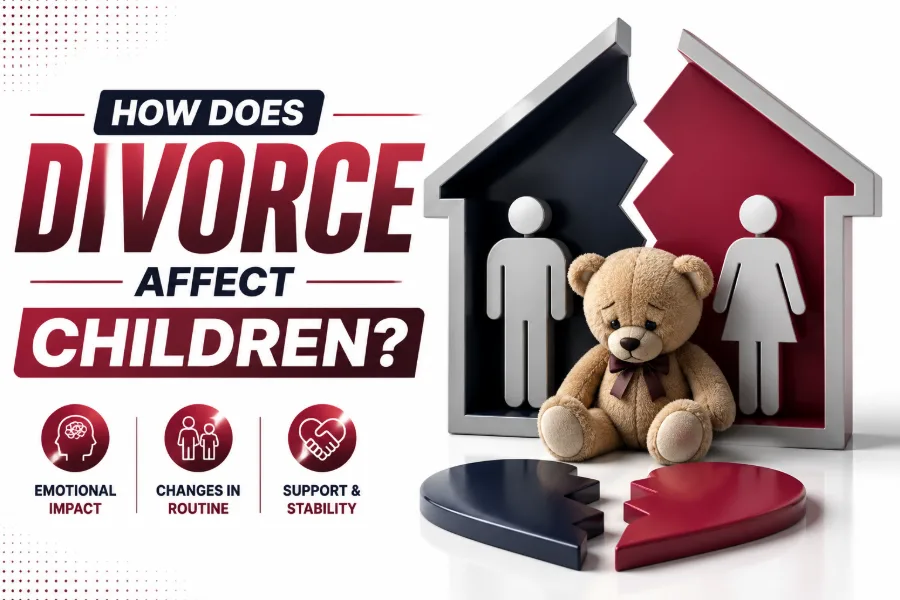
How does divorce affect children is one of the most painful questions parents ask when a marriage ends, because the answer is rarely simple. Divorce can change a child’s home, schedule, school focus, emotional security, and view of family, but it does not automatically ruin a child’s future.
When you understand the risks, reduce conflict, and give your child steady support, you can help them move through the transition with more confidence and less fear. Keep reading for more information!
How Does Divorce Affect Children In Everyday Life
Divorce affects children first through daily disruption, because children depend on predictable routines to feel safe. A child may suddenly split time between two homes, adjust to new rules, sleep in a different bedroom, or miss a parent during ordinary moments like dinner, homework, and bedtime. These changes may look small to adults, but to children they can feel like the whole world has shifted.
The biggest early challenge is not always the legal divorce itself, but the way family life changes around it. Parents who need legal guidance after a crash may use legal experts such as an Atlanta car accident lawyer to understand injury-related legal help, and families facing divorce also need reliable guidance because major life events are easier to handle when decisions are organized. Children benefit when adults slow down, plan carefully, and avoid turning every new change into another emotional emergency.
You may notice your child becoming quieter, clingier, angrier, or more distracted. Some children ask direct questions, while others express confusion through behavior rather than words. Your job is to watch the pattern, not panic over one bad day.
Emotional Effects Children May Experience
Children often feel sadness, fear, anger, guilt, and confusion after divorce. They may grieve the family life they knew, even when the home was tense before the separation. A child can love both parents deeply and still feel betrayed by the change.
Guilt is especially common because children may secretly believe they caused the divorce. They may think arguments about money, school, chores, or parenting happened because of them. You should say clearly and repeatedly that the divorce is an adult decision and not the child’s fault.
Anger can also surface in surprising ways. A calm child may become rude, impatient, or defiant, while a normally social child may pull away from friends. Instead of labeling the child as difficult, look for the fear underneath the behavior.
Academic And School-Related Effects
Divorce can affect school performance because emotional stress competes with focus. A child who once paid attention may now daydream, forget assignments, lose motivation, or struggle to prepare for tests. Teachers may notice the change before parents do, especially when the child hides distress at home.
School problems do not always mean the child has lost ability. They may simply be tired from moving between homes, worried about a parent, or distracted by court dates, arguments, and schedule changes. When possible, tell a trusted teacher or school counselor that your family is going through a transition.
Academic recovery improves when routines stay consistent. A quiet homework time, a regular sleep schedule, and a shared calendar between homes can reduce confusion. Children do better when school remains a stable place instead of another battlefield.
Social Effects And Friendship Changes
Divorce can change the way children relate to friends because they may feel different, embarrassed, or emotionally overloaded. Some children stop inviting friends over because they do not want to explain the new living arrangement. Others become more dependent on peers because home feels uncertain.
A child may also compare their family to families that seem “normal.” Neutral resources like relationship advice for couples can remind adults that relationships need communication and care, and children also need age-appropriate explanations when adult relationships change. When you speak honestly without oversharing, your child is less likely to invent painful explanations alone.
Encourage friendships without forcing social activity too quickly. A child who withdraws may need gentle structure, such as one familiar activity or one trusted friend at a time. Social healing often begins with small, safe connections.
Behavioral Changes After Divorce
Behavior is often a child’s loudest language during divorce. Younger children may cry more, have tantrums, wet the bed, or become clingy at drop-off. Older children may argue, break rules, ignore schoolwork, or act as if they do not care.
These behaviors can be frustrating, but they often signal stress rather than disrespect. A child may be testing whether love and boundaries still exist in a family that now feels uncertain. Calm rules, warm reassurance, and predictable consequences work better than harsh punishment.
Watch for behavior that becomes intense, unsafe, or long-lasting. Aggression, self-harm talk, substance use, major sleep disruption, or complete withdrawal should be taken seriously. Professional support can help before temporary distress becomes a deeper problem.
Physical Health And Sleep Effects
Divorce stress can show up in the body. Children may complain about stomachaches, headaches, fatigue, appetite changes, or sleep problems. These symptoms are real, even when doctors do not find a major physical illness.
Sleep is especially vulnerable because bedtime is when children think, worry, and miss the absent parent. A child may ask repeated questions, need extra reassurance, or fear that another parent will leave too. Simple routines like reading, a night-light, and a predictable call schedule can help.
Do not dismiss physical complaints as attention-seeking. Stress and the body are closely connected, especially in children who do not yet have mature emotional language. A medical checkup and emotional support can work together.
The Role Of Parental Conflict
The level of conflict between parents is one of the strongest predictors of how divorce affects children. A peaceful divorce can still hurt, but a hostile divorce can make the child feel trapped between two people they love. Children should not become messengers, spies, judges, or emotional caretakers.
Fighting in front of children creates loyalty pressure. They may feel they must defend one parent, comfort the other, or hide their true feelings to avoid making things worse. This kind of pressure can increase anxiety and emotional confusion.
You protect your child when you keep adult conflict away from them. That does not mean pretending everything is perfect. It means refusing to use your child as a weapon, audience, or therapist.
Why Some Children Adjust Better Than Others
Not every child reacts to divorce the same way. Age, personality, family support, financial stability, parenting quality, and the level of conflict all shape the outcome. Two children in the same family may respond very differently.
Some children are naturally more verbal and can explain what they feel. Others stay silent, act tough, or become overly responsible. A quiet child is not always a fine child, so you should check in gently and often.
Resilience grows when children feel loved by both parents where safe and possible. They need stable routines, honest explanations, and permission to have mixed feelings. They also need adults who can handle their sadness without becoming defensive.
How Divorce Affects Younger Children
Young children often understand divorce through separation, routine, and safety rather than legal meaning. A preschooler may not grasp why parents live apart, but they will notice who is missing at breakfast or bedtime. This can create clinginess, regression, or fear of being left.
Simple explanations work best for younger children. You might say that both parents love them, the child did not cause the divorce, and the adults will take care of the details. Repetition matters because young children need to hear the same reassurance many times.
Visual calendars can also help. Pictures, color-coded days, and predictable transitions make custody schedules easier to understand. The more concrete the plan feels, the safer the child may feel.
How Divorce Affects Teenagers
Teenagers may understand divorce more clearly, but that does not mean they feel less pain. They may become angry, cynical about relationships, protective of one parent, or impatient with both. Some teens also hide distress because they do not want to add more stress to the family.
Adolescents need respect and honesty, but they do not need adult-level details about betrayal, finances, or legal disputes. They should not be treated as friends, counselors, or replacement partners. They still need parenting, even when they act independent.
Watch for risky coping. Substance use, reckless behavior, sudden grade drops, isolation, or dramatic mood changes deserve attention. Teenagers may reject help at first, but steady support still matters.
Long-Term Effects On Relationships
Divorce can influence how children view love, trust, marriage, and conflict. Some children grow up afraid that relationships always end, while others become determined to build healthier partnerships. The long-term effect depends heavily on what they learn from your behavior after the divorce.
If they see bitterness, blame, and emotional withdrawal, they may associate commitment with pain. If they see accountability, respectful boundaries, and mature communication, they learn that hard endings can still be handled with dignity. Your example becomes part of their relationship education.
Children do not need a perfect family story to become secure adults. They need honesty, repair, and emotional safety. A painful family change can still teach resilience when handled with care.
When Divorce May Reduce Harm
Divorce is not always worse than staying together. In homes with constant hostility, intimidation, abuse, or severe emotional instability, separation may reduce a child’s exposure to chronic stress. A calmer home can sometimes be healthier than an intact home filled with fear.
The important difference is whether divorce reduces conflict or simply moves it into new settings. If the fighting continues through custody exchanges, texts, court disputes, and negative comments, the child may not feel much relief. The goal should be safety, stability, and lower emotional pressure.
Children should never be told that divorce is easy or harmless. They need room to grieve even when separation was necessary. Relief and sadness can exist at the same time.
How Parents Can Help Children Cope
You help your child most by staying emotionally available. Ask open questions, listen without rushing, and let your child say hard things without punishment. A child who says “I hate this” is not rejecting you; they are telling the truth about their pain.
Keep routines as steady as possible. Meals, bedtime, schoolwork, chores, and activities create structure when family life feels uncertain. Consistency does not erase grief, but it gives grief a safer place to land.
Avoid badmouthing the other parent. Even when your frustration is valid, your child may experience insults as an attack on half of their identity. Speak with trusted adults, not through your child.
Warning Signs Your Child Needs Extra Help
Some sadness, anger, and confusion are expected after divorce. However, serious or lasting symptoms may mean your child needs professional support. Early help can prevent deeper emotional and behavioral problems.
Watch for major changes in sleep, eating, grades, friendships, hygiene, or mood. Also pay attention to panic, self-harm comments, aggression, substance use, or repeated physical complaints without a clear medical cause. These signs should not be ignored.
A therapist, school counselor, pediatrician, or family counselor can help your child process the transition. Getting help does not mean you failed as a parent. It means you are taking your child’s pain seriously.
Conclusion
How does divorce affect children over time depends on what changes after the separation and how adults handle those changes. Children may face sadness, anger, school problems, social withdrawal, sleep disruption, loyalty conflict, and fear about the future, but those effects are not guaranteed to define their lives.
When you reduce conflict, protect routines, reassure them clearly, support both safe parent-child relationships, and seek help when warning signs appear, you give your child a stronger path forward. Divorce changes a family, but steady love, honest communication, and responsible parenting can help children feel secure again.